 JAMES CUBITT INTERIORS
Incubitt · Outlook 2026
Life Beyond the Drawing Board: Learn. Unlearn. Relearn.
On the quiet lessons that carry a graduate architect from school into practice, and keep shaping her still.
By Fikayo Moronkola
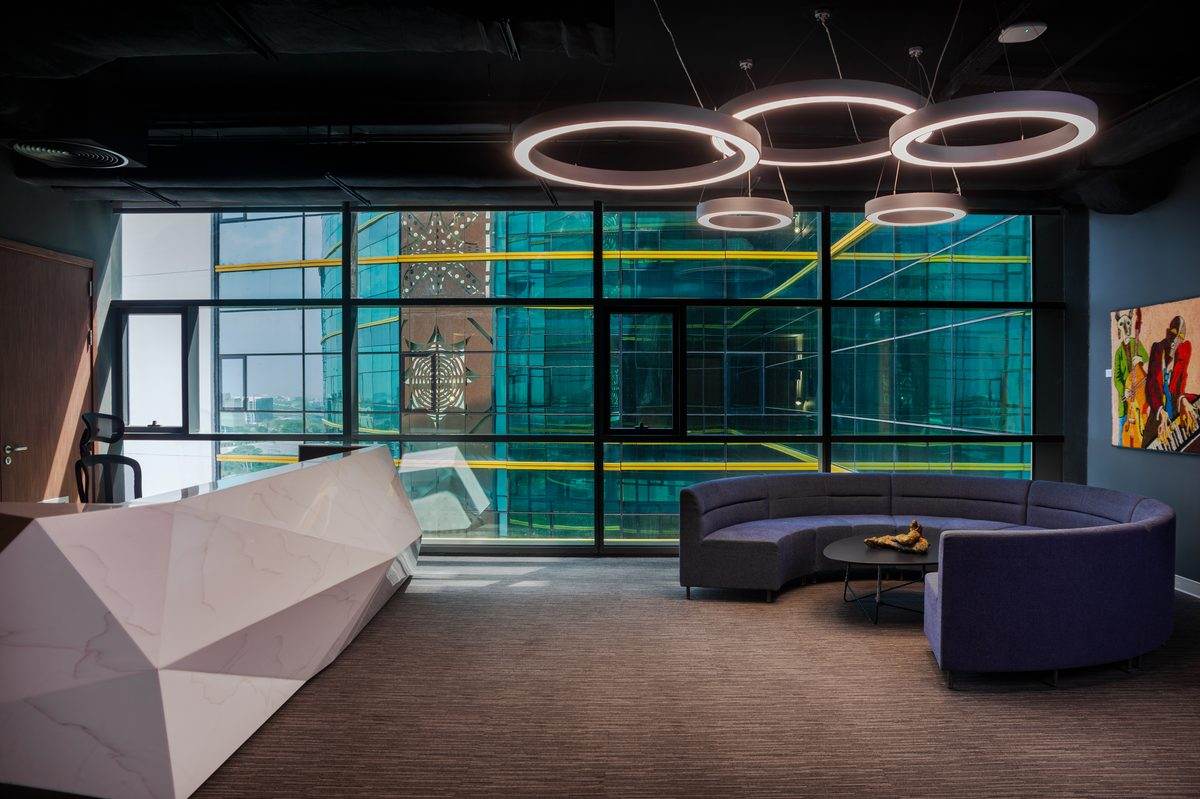
More than 25 pages of a drawing set, to complete in a day or few hours. This was one of my most memorable tasks as a graduate architect.
As I stared vividly at the screen of drawings, my mind raced back to architecture school. From semester projects that took weeks and months to complete, to the all night sleepless moments, and critiques from several juries and presentations. I remembered all those moments and believed they were meant to prepare me to think like an architect: creatively, fast and critically, especially for a time like this.
Yet this time it felt different. But deep down, all the reminders felt like an encouragement to keep going, to do something even if it is not perfect.
Looking back, I did not complete the drawing set by the end of the day, and it was a reminder of how much I still had to learn. Now I see it from another perspective: that experience was a step to a new journey of growth, understanding, and embracing. Architecture school had done its job, building a foundation that practice can stand on.
They were like two sides of the same coin, but with two different meanings and purposes. So different, yet so similar in profound ways. — A.A. Gupte
Architecture school and practice are two faces of a coin. One is a teacher that fosters imagination, explores big ideas, and stays ever curious as you design along the way. The other keeps you in check with reality; it teaches you how to be adaptable, collaborative and astute with your design choices. Between the two lies the middle ground: we, the architects. One is a builder on theory; the other reshapes, strengthens the structure, and refines on experience. You learn over time; you do not have to choose one over the other, but hold them together like a tool to shape your journey.
Beyond the drawing board, what foundations have helped shape your own journey?
Perhaps the strongest foundation we build isn’t beneath a building, but within ourselves.
From designing spaces, I have embraced three practices that continuously shape my career journey: to learn, unlearn, relearn.
1. Learn: Building the Foundation
This phase was a subtle echo that learning does not stop at graduation; instead it marks a transition: learning can take place anytime and in any location. From the classroom to an open workplace, a lecturer’s critique to a supervisor’s feedback. The realisation hits big: the client is no longer from the design brief, the client is a real person, the project is real, so are the constraints and consequences.
Learning can be found in the big moments and also in the small details. One of the big moments came from coordinating with other consultants on a project. My perspective of a ceiling became broader, from just another architectural element I put in my design, to a shared space that accommodates lighting, air conditioning systems and other building services together. Coordinating on the ceiling bulkhead came with lots of revisions, but also lessons on dimensional accuracy. Precision moved beyond producing detailed drawings to creating enough accommodation for other consultants to work with, seamlessly. And in the small: one day it is learning a new shortcut on Revit to work faster; another it is a new upgrade on Canva to improve your presentation style. With time, you learn to measure growth both in the completion of projects and in the small improvements you make every day.
2. Unlearn: Redrawing the Blueprint
If learning was centred on gaining knowledge, unlearning teaches that it is okay to let go, and that there is not one way of designing. In most cases, lessons from this phase become apparent during client reviews and the construction phase. After working on several projects, I have experienced weeks of refining concepts, renders, specifications and detailed drawings take the project in a completely different direction, following a client’s or consultant’s meeting. This is a feeling designers know well, and it can feel like going backwards. Yet it is through these moments that unlearning begins.
I have learned that the success of a project is not about defending the first idea that works, but in the courage to go back, review the design, until it becomes the right solution for the people it needs to serve. Unlearning is a teacher who reminds us that every decision we make in career or life is only as good as the understanding behind it. As we grow in understanding, in letting go, we create more room; that is where relearning begins.
Forgive yourself for not knowing earlier what only time could teach.
3. Relearn: Shaping the Fundamentals
Indeed, there are lessons that change, some that do not, and some that are reminders of the structures you carry through every level. Architecture school came with long nights, and also with managing time and working under pressure to meet deadlines. At the time, it felt like a hurdle to cross to graduate. Now those moments have become working principles that are effective in practice and appreciated. In work, some deadlines are feasible, some are not; either way, you are expected to deliver. If a drawing is delayed, it creates a ripple effect on the team’s progress, coordination and the project timeline. Time management extends beyond task completion, to setting your own goals, being accountable and reliable, and knowing when to take a break and recharge. At the end, it is all about balance: showing up in the best way you can.
Looking back on my journey beyond the drawing board, I begin to understand that growth is rarely linear or smooth. Whether we design spaces, create products, build businesses, solve problems, or are just graduating from school, there will always be a lesson to learn. In between the curve, we can embrace many phases with this rhythm: to learn, unlearn, and relearn.
Education is not preparation for life; education is life itself. — John Dewey