 JAMES CUBITT INTERIORS
Incubitt · Thought Leadership
Before Beauty, There Is Safety: The Hidden Blueprint of Nigerian Homes
Security is one of the most influential yet overlooked factors shaping residential architecture in Nigeria.
By Debola Ademola
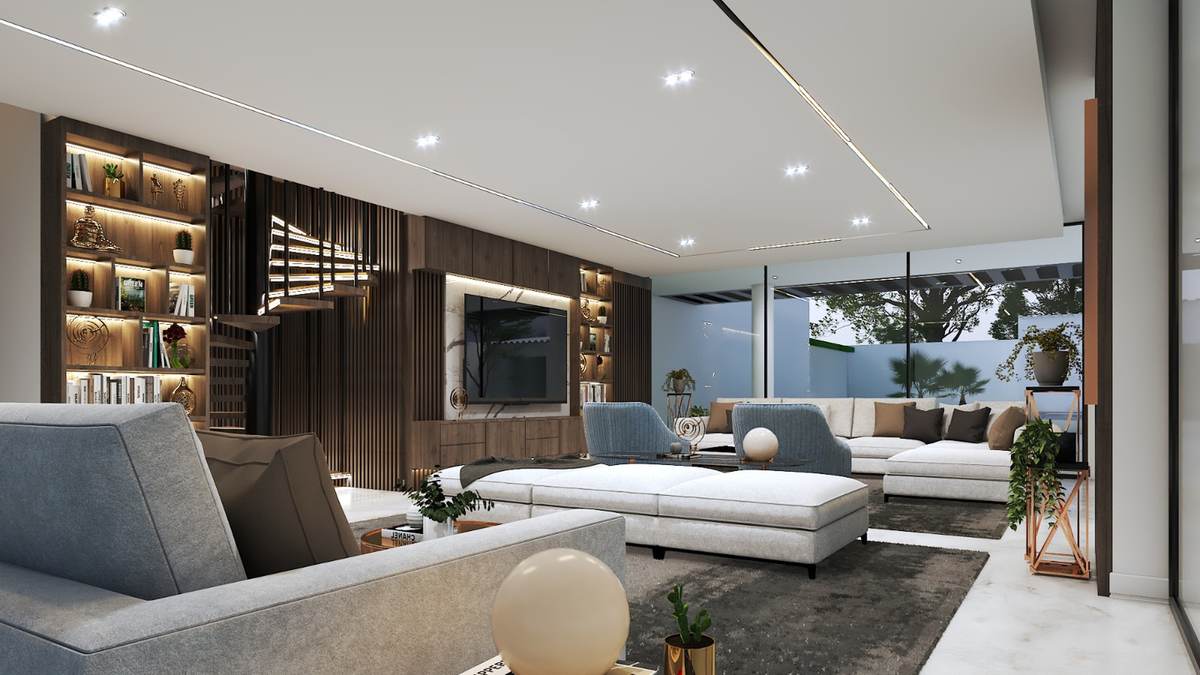
In many Nigerian homes, the first experience of architecture is not the living room, the material palette or the interior ambience; it is security. Gates, fences, surveillance systems, reinforced doors and burglar-proof windows have become defining features of residential design across urban Nigeria.
These elements are often treated as practical necessities, responding to legitimate concerns about safety and privacy.
Over time, however, security has evolved from a functional layer into something more influential: a primary design driver.
Across residential developments in cities such as Lagos and Abuja, an increasing emphasis on protection has contributed to more inward-looking homes, reduced openness and a heavier dependence on artificial cooling and lighting systems.
The result is a residential design culture in which safety does not simply shape the exterior of the home; it increasingly determines how the home feels, performs and supports everyday living.
Security has quietly become one of the strongest determinants of residential design decisions in Nigeria.
Long before conversations about aesthetics or spatial experience begin, design priorities are often organised around perimeter control, restricted access, visibility and defence.
While understandable, these decisions have consequences that extend far beyond protection.
One of the clearest examples is the treatment of openness within the home. In a tropical climate, residential interiors should ideally maximise airflow, natural light and visual connection to outdoor spaces. Yet many homes are designed in ways that intentionally reduce these qualities.
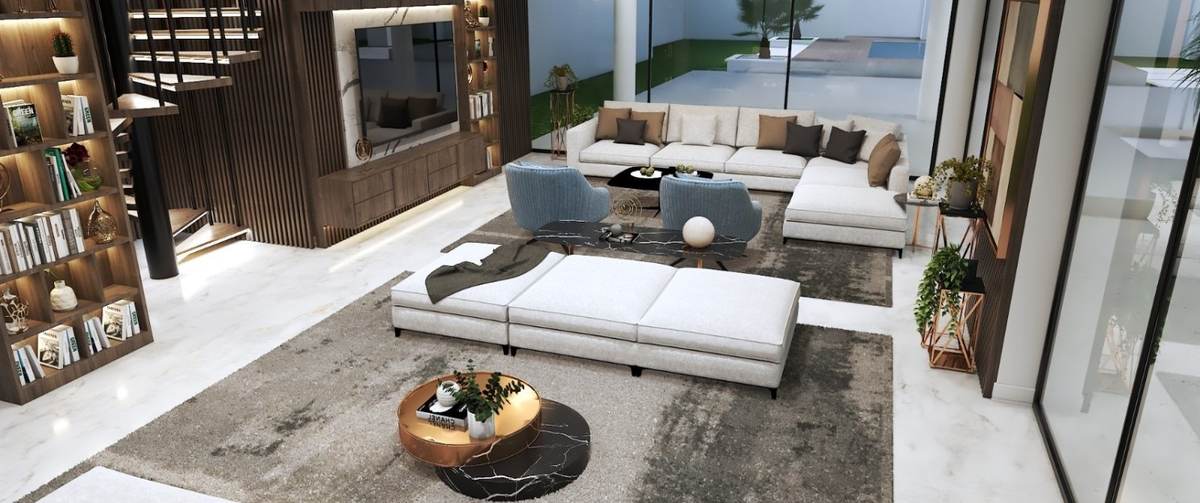
Windows become smaller or are permanently reinforced, balconies are enclosed, and layouts prioritise controlled access over permeability.
The result is not only physical enclosure, but also environmental dependence. Homes with limited natural ventilation often rely heavily on air conditioning and artificial lighting to maintain comfort.
In cities where the power supply remains inconsistent, this creates an important contradiction: residential environments are becoming increasingly dependent on mechanical systems that are not always reliable or sustainable.
There is also a less visible consequence. In many cases, security measures designed to create peace of mind can unintentionally reduce the sense of comfort within the home itself. Spaces become visually guarded, emotionally closed off and disconnected from the outdoors.
The architecture protects occupants physically, but does not always support openness, ease or psychological comfort once occupied.
This tension is particularly significant within Nigerian culture, where homes traditionally function as spaces of hospitality, gathering and social interaction.
Many residences are expected to welcome extended family, visitors and community life, yet the architecture surrounding these experiences is becoming increasingly defensive.
The question is no longer whether Nigerian homes should be secure. That reality is already established. The more important question is whether security can be integrated in ways that do not compromise wellness, environmental responsiveness or the overall experience of living.
As Nigerian cities continue to urbanise and residential density increases, this conversation will become more important for both designers and clients. Security cannot remain isolated from broader discussions about comfort, sustainability and long-term liveability.
This requires a shift away from treating security as purely defensive infrastructure.
More integrated approaches, such as layered landscaping, passive surveillance, transitional spatial buffers, filtered boundaries and climate-responsive planning, can help create homes that feel protected without becoming excessively inward-looking.
Natural ventilation and access to daylight should also remain central considerations, even within highly secured residential environments. In many cases, thoughtful planning can reduce dependence on artificial cooling systems while improving occupant comfort and spatial quality.
More importantly, residential design may need to reconsider what safety actually means. A secure home should not only prevent intrusion; it should also support rest, openness, psychological ease and quality of life for the people living within it.
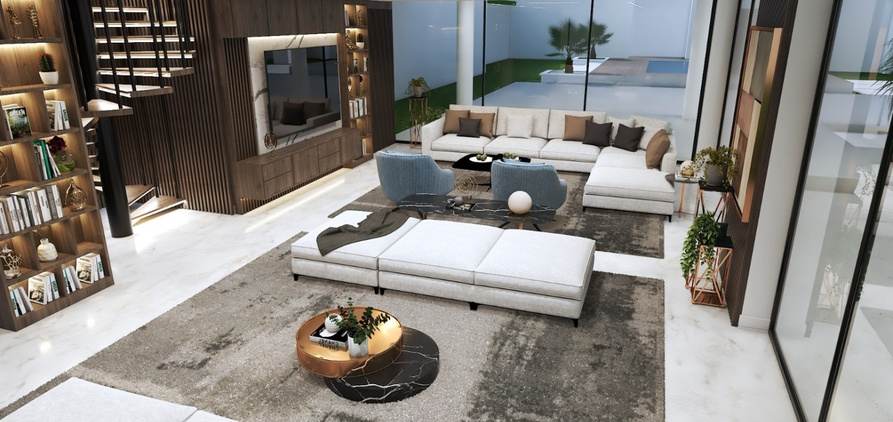
At James Cubitt Interiors, residential environments are approached as systems of experience rather than purely visual compositions. Design decisions are considered not only for their aesthetic value but also for how they affect comfort, movement, well-being, environmental performance, and everyday living.
In practice, this means balancing privacy and security requirements with equally important considerations such as natural airflow, daylight access, spatial openness, and emotional ease. Rather than treating security as a separate intervention, the focus is on integrating it in ways that strengthen the overall quality and functionality of the home environment.
Nigerian homes have always reflected the realities of the society around them. Today, one of those realities is security. As residential design continues to evolve, perhaps the challenge is no longer simply how to make homes safer, but how to ensure they remain liveable, breathable and emotionally restorative at the same time.
Ultimately, the success of a home should not be measured only by how well it keeps danger out, but also by how well it supports life within it.